Transforming the character of an interior space often requires more than fresh paint or new furnishings. Decorative ceiling beams have emerged as a powerful design element that can dramatically enhance the personality and warmth of any room. Whether you're renovating a period property or seeking to inject visual interest into a contemporary space, these architectural features offer remarkable versatility and charm. From creating cosy nooks to establishing grand architectural statements, ceiling beams provide an opportunity to redefine how we experience our living environments.
The Transformative Power of Ceiling Beams in Creating Warmth and Atmosphere
How Exposed Beams Establish a Welcoming Ambience in Your Home
Exposed beams possess an inherent ability to make interiors feel more intimate and inviting. This quality stems from their visual weight and the connection they create with traditional craftsmanship. When wooden beams stretch across a ceiling, they introduce natural texture and organic patterns that soften the rigid geometry of modern construction. The grain of timber joists catches light differently throughout the day, creating subtle shifts in shadow and tone that bring a room to life. This dynamic quality proves particularly effective in larger spaces where the challenge lies in preventing emptiness from overwhelming the atmosphere. By dividing the ceiling plane into smaller visual sections, beams help scale down vast areas without physically partitioning them, encouraging a sense of shelter and comfort that makes rooms genuinely feel like home.
The psychology behind why beamed ceilings make rooms feel more inviting
The psychological impact of decorative ceiling beams extends beyond mere aesthetics. Research into environmental psychology suggests that elements reminiscent of natural materials and traditional construction methods evoke feelings of security and groundedness. Beams represent structural integrity in our collective consciousness, even when purely decorative, creating subliminal reassurance about the solidity of our surroundings. Additionally, the horizontal lines they introduce guide the eye across the space, encouraging occupants to perceive rooms as more expansive whilst simultaneously providing definition. This dual effect proves especially valuable in open-concept spaces where zones need subtle delineation without hard boundaries. The warmth associated with timber finishes also contributes to emotional responses, with studies indicating that natural wood tones can reduce stress and promote relaxation, making beamed ceilings a valuable addition for those seeking to create truly restorative home environments.
Versatile Design Options: Finding the Perfect Beam Style for Your Space
From rustic timber to contemporary finishes: exploring beam aesthetics
The spectrum of available beam styles accommodates virtually any design vision, from heritage-focused restorations to cutting-edge contemporary schemes. Reclaimed wood beams offer authentic texture with the patina of age, their weathered surfaces telling stories through knots, nail holes, and variations in colour. Such salvaged timber brings historical charm particularly suited to farmhouse aesthetics or converted barn properties where authenticity matters. At the opposite end of the spectrum, matte black beams create striking high-contrast design moments in minimalist interiors, their crisp edges and uniform finish contributing to a more industrial style vocabulary. Between these extremes lie numerous possibilities including natural wood finishes that showcase oak beams or pine beams in their unadorned beauty, limewashed treatments that soften the visual impact whilst retaining texture, and contemporary approaches that pair sleek lines with integrated lighting. Faux wood beams have revolutionised accessibility to this design element, offering realistic reproductions at a fraction of the weight and cost of real wood beams, making installation feasible even in spaces where structural considerations would otherwise prohibit authentic timber.
Matching ceiling beams to your interior design scheme
Successful integration of ceiling beams requires thoughtful consideration of existing architectural products and design language within your space. For properties with period features, antique beams or reclaimed wood selections establish continuity with historical charm, particularly effective in converted farmhouses or 17th-century buildings where maintaining character proves paramount. Contemporary interiors benefit from cleaner profiles and finishes that complement rather than compete with modern furnishings, perhaps incorporating elements from the molduras orense blog aesthetic where refined detailing meets architectural interest. The relationship between beam colour and ceiling treatment creates significant impact on spatial perception. Light wooden beams positioned against limewashed ceilings generate an airy Scandinavian sensibility, whilst dark timber against white creates dramatic definition suitable for loft conversions or spaces seeking bold statements. Consideration of complementary elements matters equally, with beam choices ideally echoing tones found in wooden furniture, flooring, or architectural trim throughout the property. This holistic approach ensures beams enhance rather than fragment the overall design narrative, creating cohesive interiors where every element contributes to a unified vision.
Visual manipulation: how ceiling beams alter spatial perception
Creating the Illusion of Height and Grandeur with Strategic Beam Placement
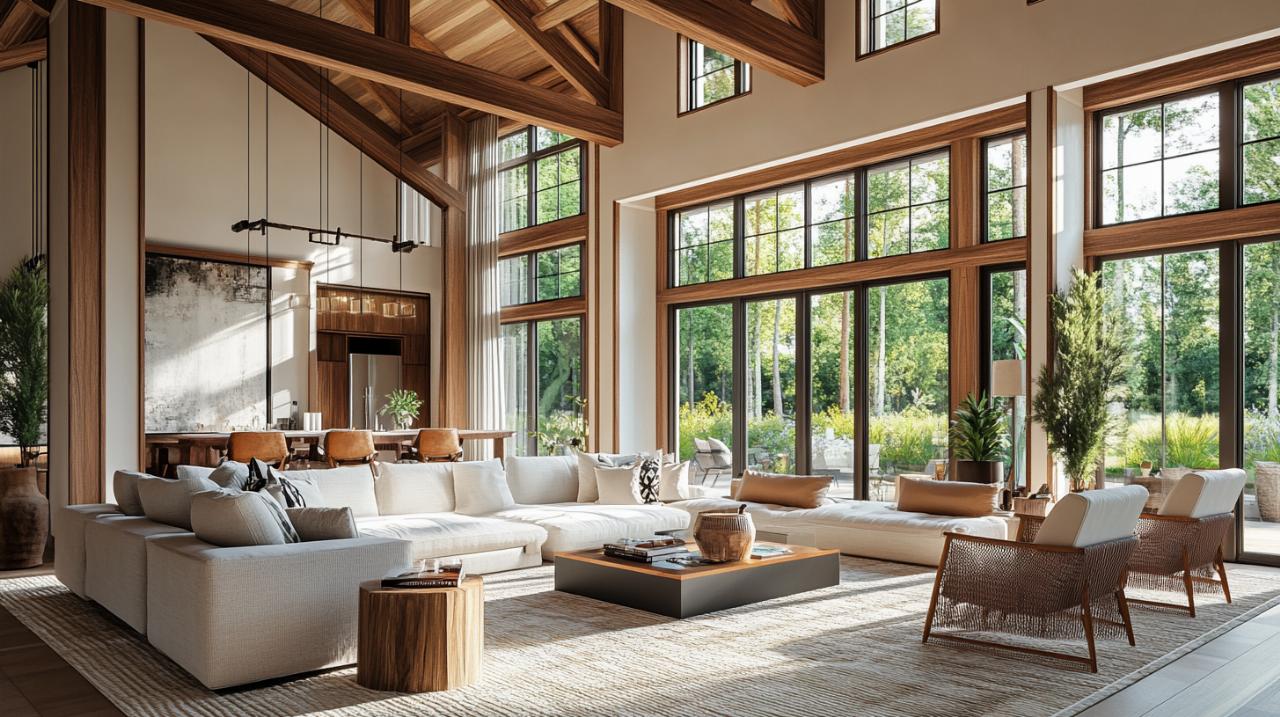
Beam placement dramatically influences how we perceive ceiling height and room proportions. Contrary to intuition, carefully positioned beams can actually make spaces feel taller rather than more compressed. This effect relies on directing visual attention along specific axes, with beams running lengthwise down a room drawing the eye forward and emphasising distance. In vaulted ceilings, following the natural slope with parallel beams accentuates the dramatic upward sweep, amplifying the sense of volume. The spacing between beams also affects perception, with intervals of three to five feet creating rhythm without overcrowding, allowing each element breathing room whilst maintaining visual continuity. Beam depth requires calibration to ceiling height, with four to six inch profiles suiting standard eight to nine foot ceilings, whilst grander spaces with twelve foot heights accommodate more substantial eight to twelve inch beams that maintain appropriate proportions. Symmetrical layouts establish order and formality particularly suited to dining rooms or primary living spaces, whereas asymmetric arrangements can introduce dynamic energy appropriate for creative studios or contemporary interiors that celebrate less predictable compositions.
Using Beams to Define Zones and Add Architectural Interest
In open-concept spaces where walls have been eliminated to create flowing environments, decorative ceiling beams provide essential zone definition without reinstating physical barriers. A cluster of beams positioned above a kitchen island establishes that area as distinct whilst maintaining visual connection to adjacent living spaces. Similarly, beams can frame seating areas within larger great rooms, creating intimate conversation zones that feel purposeful rather than arbitrary. This functional use extends to concealing imperfections in older properties where ceiling surfaces may suffer from unevenness or historical modifications. Rather than undertaking expensive replastering, strategically positioned beams draw attention upward to their architectural interest whilst simultaneously masking flaws beneath. The three-dimensional quality beams introduce transforms flat ceilings into sculptural planes, adding depth that photographs well and creates memorable impressions. This visual architecture proves particularly valuable in minimalist design schemes where decoration remains restrained, allowing beams to serve as the primary decorative gesture that prevents spaces from feeling austere or under-furnished.
Elevating your interior with decorative ceiling beam installations
Practical considerations when adding ceiling beams to your property
Embarking on a ceiling beam project requires careful planning around both aesthetic and practical factors. Budget considerations vary significantly depending on material choices, with real wood beams commanding prices from forty to one hundred pounds per linear foot or more, whilst faux wood beams offer comparable visual impact for fifteen to forty pounds per foot. A single room treatment might require five hundred to fifteen hundred pounds, whereas ambitious coffered ceiling projects in primary living spaces could reach two thousand to five thousand pounds, and comprehensive great room installations with extensive coverage might extend to fifteen thousand pounds. DIY installation remains feasible for lighter faux beams, offering customisation opportunities regarding stain, dimensions, and finish, though professional consultation ensures proper attachment and avoids common pitfalls. Electrical planning deserves attention early in the design process, particularly when integrated lighting forms part of the vision, requiring coordination with qualified electricians to route wiring before beam installation. Sampling different beam styles and finishes in your actual space proves invaluable, as lighting conditions and surrounding colours dramatically affect how materials appear, making showroom selections sometimes misleading when transplanted into different environments.
The Long-Term Value and Character That Ceiling Beams Bring to Your Home
Beyond immediate aesthetic transformation, decorative ceiling beams contribute lasting value to properties. They represent a permanent architectural upgrade rather than superficial decoration, an improvement that withstands changing trends whilst adding distinctive character that differentiates homes in competitive property markets. The emotional impact of well-executed beam installations creates memorable first impressions during viewings, with potential buyers often citing such features as key factors in their decision-making. Sustainability considerations increasingly favour natural materials, making timber beams from sustainable sources or reclaimed wood particularly appealing to environmentally conscious homeowners. The versatility of beams also ensures relevance across evolving interior design preferences, with the same structural elements serving equally well in rustic schemes, contemporary settings, or hybrid styles that blend multiple influences. As homes age, beams acquire their own patina and character, developing richer tones and perhaps minor imperfections that enhance rather than diminish their appeal. This graceful ageing stands in stark contrast to many modern materials that simply deteriorate, making timber beams an investment that genuinely improves with time whilst continuously enhancing the spaces they inhabit.